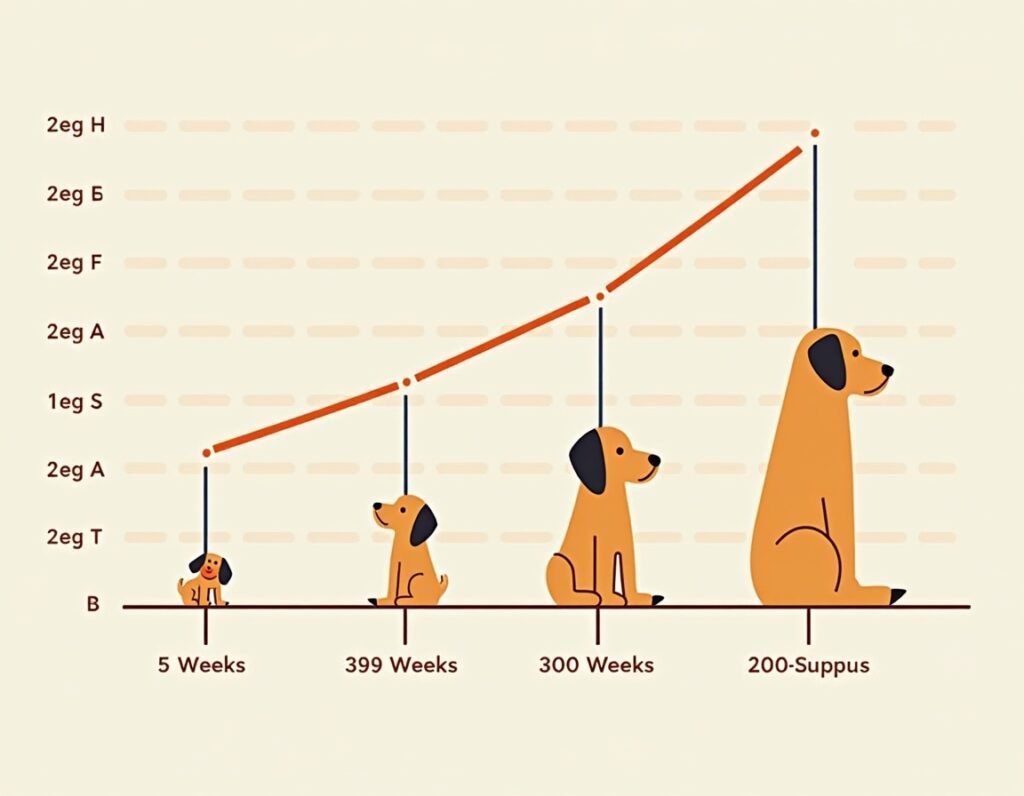
Use this puppy growth guide to measure weight and height from 8 weeks to adulthood, record key milestones, and know when to seek veterinary advice.
Table of Contents
Regularly recording your puppy’s weight and height can help you notice patterns in development and provide useful context during veterinary visits. Growth varies naturally, however, and is influenced by breed, sex, genetics, nutrition, health, and expected adult size. A measurement is not a test your puppy must pass, and a chart comparison cannot establish a diagnosis or replace veterinary care. Instead, keep consistent records and consider each result alongside appetite, energy, movement, behavior, and general health. Breed-specific references can help you interpret the record more appropriately, provided they are treated as guides rather than exact predictions.
What Healthy Puppy Growth Means
Healthy puppy growth means making steady, appropriate progress for that individual puppy—not reaching one exact weight or height at a particular age. Breed, sex, genetics, nutrition, health, and expected adult size all influence the pattern, so there is no universal pace or target that applies to every puppy.
Weight and height provide useful information about physical growth, but they are not a complete health assessment. Appetite, energy, behavior, movement, and general condition also matter. A puppy may differ from a broad reference range without being unwell, while a measurement that appears typical does not guarantee good health. Consider each entry as part of a longer trend and discuss concerns with a veterinarian.
Start With a Reliable Baseline at 8 Weeks
At or near 8 weeks, create a starting record that you can build on rather than a definitive prediction of adult size. Include:
- Date of birth, if known, and the puppy’s current age
- Weight and height, recorded with the units used
- Breed or mix, sex, and expected adult-size category
Note whether any detail is estimated or unavailable. If your puppy’s breed background or parental information is uncertain, later comparisons with breed references will be less precise. That does not make tracking unhelpful; it simply means you may need to consider broader reference ranges and place more emphasis on the puppy’s overall growth trend and health.
Choose the Right Breed Standard
Choose a growth reference that matches your puppy’s breed, sex, and expected adult-size category as closely as possible. A reference for a small breed may not be useful for a puppy expected to become medium or large, and comparisons can be less precise when reliable parental information is unavailable.
Mixed-breed puppies may not fit neatly within a single breed standard. You may need to consider broader references that reflect the puppy’s likely adult-size range rather than comparing it with one specific breed. Treat any standard as a guide or reference range, not a guarantee or required outcome. A veterinarian can help identify the most relevant comparison when your puppy’s breed background or expected adult size is uncertain.
How Often to Record Weight and Height
Choose a tracking routine that is practical for you and consistent enough to show changes over time. There is no need to follow a rigid schedule unless your veterinarian recommends one. When possible, weigh and measure your puppy under similar conditions, such as at a comparable time of day and before or after similar activities. This makes entries easier to compare and helps distinguish a meaningful trend from normal variation in measurement. Record the date and your puppy’s age with every weight and height entry, along with the units used. If a measurement occurs under unusual circumstances, such as after a large meal or during illness, note that context in the record.
How to Weigh a Puppy Safely
Use a household, baby, or pet scale that can support your puppy securely and display the weight clearly. Place it on a stable, level surface, and keep your puppy calm with gentle encouragement. Do not force a frightened, struggling, or constantly moving puppy onto the scale, and avoid unsafe lifting or restraint. If necessary, ask another adult for help or wait and try again. Record the result using the same unit each time, such as pounds or kilograms. If you change units, document the conversion clearly so later entries remain comparable. Note any unusual circumstances that may have affected the reading.
How to Measure Height Consistently
Measure your puppy’s height from the floor to the top of the shoulders, not to the top of the head. The shoulder point is the highest part of the back where the neck meets the body. Have your puppy stand on a level, firm surface with all four feet positioned as naturally and evenly as possible. Use the same method and positioning each time so entries are easier to compare. Wiggly puppies may shift their posture, making small variations unavoidable. Keep the experience calm and avoid forcing your puppy to stand still. If a reading seems unusual, repeat it under similar conditions before interpreting it as a meaningful change.
Build a Simple Growth Record
Use a table, notes file, spreadsheet, or calculator that is easy to update over time. Include the measurement date, your puppy’s age, weight, height, units, and the comparison reference you used. Add brief food or health notes, such as a recent meal, illness, or difficulty standing still during the measurement. These details do not automatically explain a change, but they provide useful context when you review the record. Keep the format simple enough to maintain consistently. A clear series of entries is more useful than a detailed system that is difficult to keep current.
Read the Growth Trend, Not One Number
Review several entries together rather than reacting to a single weight or height reading. A healthy pattern may show gradual progress, a temporary plateau, or an apparent jump caused by normal variation or differences in measurement conditions. Check whether the puppy was measured on a similar surface, at a comparable time, and in a similar posture. If one result looks unusual, repeat the measurement under consistent conditions before drawing conclusions.
A reading outside a general expectation does not establish a problem by itself. Consider it alongside appetite, energy, movement, behavior, and overall condition, as well as the puppy’s breed, sex, expected adult size, and health history. Charts can provide context, but a position on a chart or a single change cannot diagnose a cause. If the broader pattern or your puppy’s health raises concern, discuss the records with a veterinarian.
Account for Breed, Sex, and Mixed Ancestry
Puppies mature at different rates because breeds and expected adult-size categories follow different growth patterns. A puppy expected to remain small may reach much of its adult height sooner than one expected to become large, while two puppies of the same age may still differ because of genetics and family background. Sex can also contribute to variation, but it does not provide a precise target for every individual puppy.
Mixed-breed puppies may inherit traits from more than one type of dog, making a single-breed reference less exact. Direct comparisons with unrelated puppies can therefore be misleading. Focus on your puppy’s own measurements over time, consider the most appropriate broader reference available, and ask your veterinarian to interpret the trend alongside body condition and overall health.
Weight and Body Condition Are Not the Same
A scale reading can help track growth, but an appropriate number does not by itself confirm that your puppy is in good condition. Two puppies with similar weights may differ in body condition because their size, structure, and build are different.
Along with weight and height, consider your veterinarian’s body-condition guidance and note visible changes over time. Appetite, energy, movement, behavior, and general health also provide important context. Avoid pursuing a weight target solely because a chart or calculator suggests it. If your puppy’s appearance, activity, eating habits, or overall condition concerns you, record what you observe and discuss it with your veterinarian rather than trying to interpret the scale alone.
Use Adult-Size Estimates Carefully
An estimated adult size can help with practical planning, such as preparing for your puppy’s likely space, equipment, and routine needs. However, it is a planning aid, not a promise. Estimates are inherently uncertain, particularly for mixed-breed puppies or puppies whose parental information is unavailable or unreliable. Do not treat the estimate as a required endpoint or judge your puppy’s development solely by whether it appears likely to reach that size. Instead, follow the puppy’s measurements over time and consider them alongside body condition, appetite, energy, movement, and general health. If the trend or your puppy’s condition raises concern, discuss the record with a veterinarian.
When Growth Patterns Deserve Attention
Growth records are most useful when considered alongside your puppy’s overall condition. Contact your veterinarian for guidance if you notice:
- An unexpected change in weight or height that continues across multiple measurements
- Poor appetite or a noticeable change in eating habits
- Persistent digestive signs
- Unusual low energy or changes in normal behavior
- Pain, stiffness, or difficulty moving
- Concern that your puppy is substantially underweight or overweight
These observations do not identify a cause on their own, and a single measurement does not establish a diagnosis. Share your growth record, health notes, and any changes you have observed with your veterinarian. They can assess the pattern in context and advise whether adjustments to nutrition, routine, or further evaluation are appropriate.
How Nutrition and Routine Affect Development
Use your growth record to support conversations with your veterinarian about feeding and daily care. Nutrition should be appropriate for your puppy’s age, expected adult size, and health needs, while exercise and routine should reflect the individual puppy’s condition and development.
A chart comparison can be a useful prompt for questions, but it is not an instruction to change food amounts, feeding plans, exercise, or supplements independently. Do not pursue a weight target or add supplements solely because one measurement differs from a reference. Consider the broader pattern, including appetite, energy, movement, body condition, and general health, and ask your veterinarian whether any adjustment is appropriate.
Use a Calculator or Spreadsheet Without Overrelying on It
A simple calculator or spreadsheet can make your growth record easier to maintain. Enter each measurement date, your puppy’s age, weight, height, and relevant notes. The tool can calculate changes between entries, display weight or height as a trend, and compare measurements with a selected breed or size reference. Use consistent units and check that the reference matches your puppy as closely as possible. Automation can improve organization and make patterns easier to review, but it cannot account fully for breed background, body condition, or overall health. An automated result is not a diagnosis or a personalized feeding recommendation; discuss concerns with your veterinarian.
A Practical Tracking Workflow From Puppyhood to Adulthood
- Establish a baseline at or near 8 weeks, including age, weight, height, breed or mix, sex, and expected adult-size category.
- Measure weight and height consistently, using similar conditions and the same units whenever practical.
- Update your table, notes file, spreadsheet, or calculator after each measurement. Include the date, age, and any unusual circumstances.
- Review the trend across several entries rather than reacting to one number. Note gradual progress, plateaus, or apparent jumps.
- Compare the pattern with the most appropriate breed, sex, or size reference, treating it as context rather than a required target.
- Add health information, such as appetite, energy, movement, body condition, or digestive signs.
- Bring the record and your questions to veterinary visits, especially when the overall pattern or your puppy’s health raises concern.
Questions to Bring to the Veterinarian
Bring your growth record and consider asking:
- Does my puppy’s weight and height pattern appear appropriate for its breed, sex, and expected adult size?
- What adult size is realistic to expect, and how should we interpret the reference chart?
- How would you assess my puppy’s body condition, appetite, energy, and movement?
- Is the current diet and exercise routine appropriate?
- Could parasites, digestive signs, illness, or other health concerns affect this pattern?
- What should we do if my puppy’s measurements consistently differ from the reference?
Growth standards are useful for context, not pass-fail tests. Your puppy does not need to match a single number to be developing appropriately. Keep records consistently, observe changes calmly, and consider measurements alongside appetite, energy, movement, body condition, and overall health. If the broader pattern changes unexpectedly or your puppy seems unwell, share your notes with a veterinarian. Professional guidance can help put the numbers in perspective and determine whether any further attention is needed.