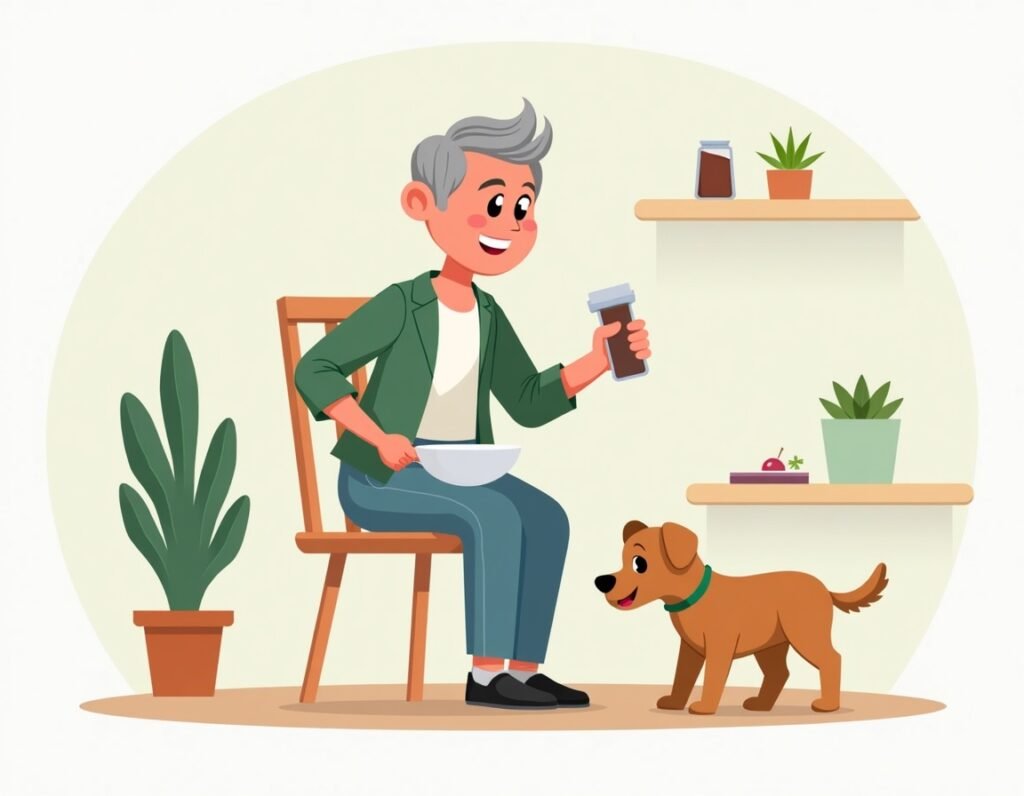
As dogs age, their nutritional needs may change, but “senior” status alone does not determine the right diet. Body weight, joint comfort, and kidney health are connected considerations: reduced mobility can lower calorie needs, while excess weight can place added strain on joints. Changes in appetite, thirst, urination, or weight may also require an individualized assessment rather than a routine food switch.
Nutrition can support a broader health-management plan, but it cannot replace diagnosis or veterinary care. Before making major changes to food portions, diets, or supplements, consult a veterinarian—especially if illness is suspected or a condition has already been diagnosed. The most appropriate plan depends on the individual dog’s health, activity, body condition, and medical history.
Table of Contents
Start With a Senior-Dog Nutrition Check
Before changing your dog’s food, gather a clear picture of their current routine. This is not a diagnostic tool; it is preparation for a more informed conversation with your veterinarian. An older dog’s needs can vary widely based on size, body condition, health status, and daily lifestyle—not age alone.
- Age, breed or size, and current body condition
- Activity level, mobility changes, appetite, and eating habits
- Medical history, including diagnosed conditions and recent symptoms
- Current food, measured meal portions, and feeding schedule
- All treats, table extras, chews, toppers, and supplements
Include everything your dog consumes, not just the main meal. A complete review can reveal whether portions, extras, or supplements may need discussion. Note any changes in appetite or willingness to move, then share this information with your veterinarian before making significant dietary adjustments.
Adjust Calories to Prevent Excess Weight
Many older dogs become less active as their routines, mobility, or comfort levels change. As a result, the portion that previously maintained a healthy body condition may eventually provide more calories than the dog needs. Gradual weight gain can be easy to miss, especially when meal sizes have not changed. Excess body weight can add strain to already vulnerable joints and may make comfortable movement more difficult.
Start by reviewing the full daily intake rather than focusing only on the main food. Measure meals consistently instead of estimating portions, and compare the amount offered with your dog’s current body condition and activity. Treats, chews, toppers, table extras, and other additions should all be included in this review.
- Use a consistent measuring tool for every meal.
- Record extras given by everyone in the household.
- Make modest portion adjustments rather than abrupt reductions.
- Reassess body condition and weight regularly over time.
A gradual approach helps owners observe how a dog responds while maintaining a consistent feeding routine. If weight changes unexpectedly, appetite changes, or body condition is difficult to manage, consult a veterinarian. They can help determine whether the issue is related to intake, activity, an underlying health concern, or a combination of factors.
Maintain Protein Quality, Not Just Lower Calories
Calorie control should not mean indiscriminately restricting nutrients. When portions need to decrease, the goal is still to provide a complete, appropriately formulated diet that supports overall nutrition and helps maintain lean body mass. Simply feeding much less of a food without reviewing its nutritional balance may leave a dog’s needs inadequately addressed.
If your dog requires a substantial reduction in portions to maintain a healthy body condition, discuss whether a different food would better meet their needs at a lower calorie intake. A high-quality, complete diet can make it easier to adjust calories while maintaining a consistent feeding routine.
Protein decisions require particular care. Not all senior dogs need a low-protein diet, and the appropriate protein level depends on the individual dog’s health, body condition, and diagnosis. For dogs with kidney concerns, protein choices should be made with veterinary guidance rather than by selecting a food based on age or a general “senior” label.
Support Joints Through Overall Diet
Joint support is best considered part of an older dog’s overall health plan. Maintaining a healthy body weight can help limit added strain on the joints and support comfortable mobility. For dogs whose calorie needs have decreased, a measured feeding routine and careful review of treats can be important parts of that effort.
A complete senior diet may be chosen with joint-focused nutritional features in mind, but the right choice should reflect the dog’s full health picture. Weight, activity level, body condition, medical history, and kidney status all matter. A food selected primarily for joint support may not be appropriate if the dog also has kidney concerns or other dietary needs, so discuss options with a veterinarian before changing foods.
Diet can support joint management, but it is not a substitute for evaluating joint disease or pain. Stiffness, limping, reluctance to rise, difficulty with stairs, reduced interest in walks, or other mobility changes are clear reasons to seek veterinary assessment. A veterinarian can help identify the cause and recommend an appropriate plan that may include nutrition alongside other forms of care.
Use Supplements Carefully
Joint supplements are a common consideration for older dogs, but they should be reviewed with a veterinarian before they are added, replaced, or combined with other products. The same principle applies to any supplement: a product that seems appropriate in general may not fit an individual dog’s diet, health status, or treatment plan.
Bring the product label or a complete ingredient list to the discussion. Your veterinarian can review active and inactive ingredients, the intended dose, potential interactions, and any calories contributed by chews, powders, or other formats. This is especially important when a dog has a medical condition, including kidney concerns, or receives medication, since supplements can complicate an overall diet review.
Supplements may have a place in a broader plan, but they are not automatic requirements for every senior dog. Use them only when they suit the dog’s individual needs and veterinary guidance.
Take Kidney Concerns Seriously
Changes in thirst, urination, appetite, nausea, or body weight are reasons to contact a veterinarian, particularly in an older dog. These signs do not confirm kidney disease on their own. They can have different causes, and a veterinary assessment is needed to understand what may be affecting your dog’s health.
General senior nutrition and a feeding plan for diagnosed kidney disease are not the same. A standard senior-dog food is not automatically appropriate for a dog with kidney concerns, just as a change in drinking or eating habits should not be treated as proof that kidney disease is present.
If kidney disease is suspected or diagnosed, dietary decisions should follow veterinary guidance and the dog’s individual assessment. Avoid making major food changes based only on age, vague symptoms, or a package label. A veterinarian can help determine whether kidney-supportive nutrition is needed and how it should fit with the dog’s body condition, appetite, other health concerns, and overall care plan.
Choose Foods for Kidney Support With Veterinary Guidance
When kidney disease is diagnosed, therapeutic nutrition should be individualized. It may differ substantially from an ordinary senior-dog diet because the feeding plan must account for the dog’s assessment, body condition, appetite, other health concerns, and overall care needs.
Do not make broad dietary restrictions on your own or assume that a food marketed for seniors will provide appropriate kidney support. Restricting the wrong nutrients without guidance can make the overall diet less suitable for your dog. Likewise, supplements should not be used in place of a veterinarian-recommended feeding plan.
Your veterinarian can help determine whether a therapeutic diet is needed and how to introduce it in a way that supports adequate intake. If your dog is reluctant to eat, losing weight, or showing changes in thirst, urination, or energy, contact the veterinarian rather than attempting to manage those concerns through self-directed food changes.
Make Diet Changes Gradually and Monitor Results
When a food or portion change is appropriate, introduce it gradually at a pace your dog tolerates. A slower transition may be needed if your dog has a sensitive appetite or digestive changes. Avoid changing several parts of the feeding routine at once, since this can make it harder to identify what is affecting your dog.
Keep tracking simple: note appetite, stool quality, energy, weight, and mobility in a notebook or phone. Brief, regular observations can make patterns easier to recognize and discuss during veterinary visits. Continue measuring meals and account for treats while monitoring how your dog responds.
Contact your veterinarian if appetite worsens, digestive changes persist, energy declines, or mobility concerns appear or progress. These changes may require professional guidance rather than further self-directed adjustments to food or portions.
Build a Sustainable Senior Feeding Routine
A sustainable routine relies on consistent habits and regular review rather than a one-time food switch. Keep the plan practical:
- Measure meals consistently and account for treats, chews, toppers, and table extras.
- Reassess body condition and weight regularly.
- Choose food according to your dog’s health needs, activity, and appetite—not age alone.
- Use routine veterinary checkups to refine feeding decisions over time.
These checkups are also the right time to revisit weight management, joint comfort, or kidney-related concerns as your dog’s needs change. Consistent observation, measured portions, and small, informed adjustments can help keep the feeding plan appropriate over time.